
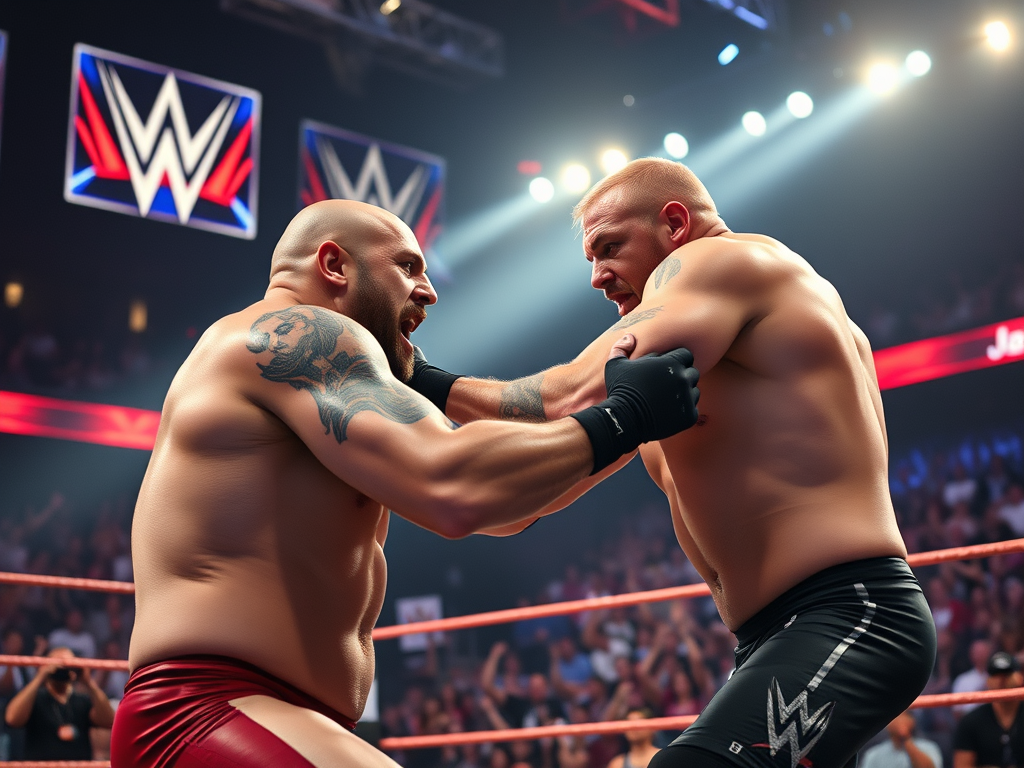
Delhi NCR, Cricastar Sports Desk: The question of whether World Wrestling Entertainment (WWE) is “fake” or “real” has sparked debates among fans, skeptics, and newcomers for decades. To address this, we need to dive into the unique blend of athleticism, storytelling, and spectacle that defines WWE, exploring its scripted nature, physical demands, and cultural impact. This article aims to clarify the reality behind WWE while celebrating its artistry and authenticity in its own right.
The Scripted Nature of WWE: It’s Entertainment, Not Competition
At its core, WWE is a form of scripted entertainment, often described as “sports entertainment.” Unlike traditional sports like football or boxing, where outcomes are determined by athletic competition, WWE matches have predetermined results. Writers and producers craft storylines, decide winners and losers, and choreograph key moments to advance narratives or build drama. This scripting is akin to a television show or movie, where the goal is to entertain the audience through compelling characters and plotlines.
For example, iconic rivalries like Stone Cold Steve Austin vs. Vince McMahon or The Rock vs. John Cena were meticulously planned to maximize fan engagement. These storylines often span weeks, months, or even years, culminating in high-stakes matches at events like WrestleMania. The outcomes are not left to chance; they serve the story, much like a scripted fight scene in a blockbuster film.
So, in this sense, WWE is “fake” in that it is not a legitimate athletic competition with unscripted results. The term “fake,” however, can be misleading, as it implies a lack of authenticity or effort, which doesn’t fully capture the reality of what wrestlers do.
The Physical Reality: Athleticism and Risk
While the outcomes are scripted, the physicality of WWE is undeniably real. Professional wrestlers are elite athletes who undergo rigorous training to perform high-risk maneuvers, endure physical punishment, and maintain peak physical condition. The moves, while choreographed, require precision, strength, and trust between performers to avoid serious injury.
Consider a move like the “suplex,” where one wrestler lifts and throws another over their shoulder. Though planned, the impact of landing on a wrestling mat—often only thinly padded—can be jarring. High-flying moves, like diving off the top rope or executing a moonsault, carry significant risks if mistimed. Injuries are common, with wrestlers suffering everything from bruises and concussions to torn ligaments and broken bones. For instance, in 2007, wrestler Chris Benoit’s career was marred by the long-term effects of repeated head trauma, highlighting the very real toll of the profession.
Wrestlers also train extensively to “sell” moves, making them appear devastating while minimizing harm. This requires a deep understanding of body mechanics and timing. The blood seen in some matches, while sometimes enhanced with props like blood capsules, can also be real, resulting from intentional cuts (called “blading”) or accidental impacts. The physical demands are so intense that many wrestlers, like Edge or Daniel Bryan, have had to retire early due to cumulative injuries.
In short, while the drama is scripted, the athleticism, pain, and risk are very real. Wrestlers put their bodies on the line to deliver a convincing performance, blurring the line between fiction and reality.
Kayfabe: The Art of Blurring Reality
A key concept in understanding WWE is “kayfabe,” the practice of maintaining the illusion that the scripted events are real. Historically, wrestlers and promoters went to great lengths to protect kayfabe, staying in character outside the ring and avoiding public acknowledgment of the scripted nature. While kayfabe has loosened in the modern era—WWE openly markets itself as entertainment, and wrestlers break character on social media— it remains a cornerstone of the experience.
Kayfabe allows fans to suspend disbelief, much like watching a gripping movie. When a heel (villain) like MJF taunts the crowd or a babyface (hero) like Rey Mysterio overcomes the odds, the emotional investment feels real, even if the story is scripted. This emotional authenticity is why fans cheer, boo, or cry during matches, fully immersed in the narrative.
The Cultural Impact: Why It Matters
WWE’s blend of athleticism and storytelling has made it a global phenomenon, with millions of fans tuning in for weekly shows like Raw and SmackDown or major events like WrestleMania. Its influence extends beyond wrestling, shaping pop culture through iconic figures like Hulk Hogan, Dwayne “The Rock” Johnson, and John Cena, who have crossed over into film, television, and philanthropy.
The scripted nature doesn’t diminish WWE’s impact; it enhances it. By crafting larger-than-life characters and epic feuds, WWE taps into universal themes of triumph, betrayal, and redemption. It’s a modern-day theater, combining athletic prowess with dramatic flair to create moments that resonate across generations.
The Fan Perspective: Embracing the Spectacle
For fans, the “fake or real” debate often misses the point. Many embrace WWE for its entertainment value, appreciating the athleticism and creativity without needing it to be an unscripted sport. As one X post from a wrestling fan put it in 2024: “Calling WWE fake is like saying a Marvel movie is fake. It’s scripted, sure, but the stunts, the passion, the storytelling? That’s real enough for me.”
Others, however, feel misled if they approach WWE expecting a genuine competition. This disconnect often arises when newcomers aren’t aware of the scripted nature. WWE has leaned into transparency in recent years, with documentaries like Beyond the Mat and WWE’s own behind-the-scenes content revealing the hard work and artistry involved.
Conclusion: A Unique Blend of Reality and Fiction
So, is WWE fake or real? The answer lies in the nuance. WWE is scripted entertainment, with predetermined outcomes and choreographed matches, but the athleticism, injuries, and emotional resonance are undeniably real. It’s a hybrid of sport and theater, demanding both physical prowess and creative storytelling. Rather than labeling it “fake,” it’s more accurate to call it a carefully crafted spectacle that delivers real emotions and unforgettable moments.
For those still on the fence, the best way to understand WWE is to watch it. Tune into a WrestleMania or follow a storyline on Raw. Cheer for your favorite wrestler, boo the villain, and let yourself get swept up in the drama. You might just find that, fake or real, WWE’s magic is hard to resist.
Disclaimer: Cricastar does not independently verify this information. The details have been sourced from external reports. Readers are advised to use their discretion while interpreting the content.
 Cricastar
Leave a Reply