
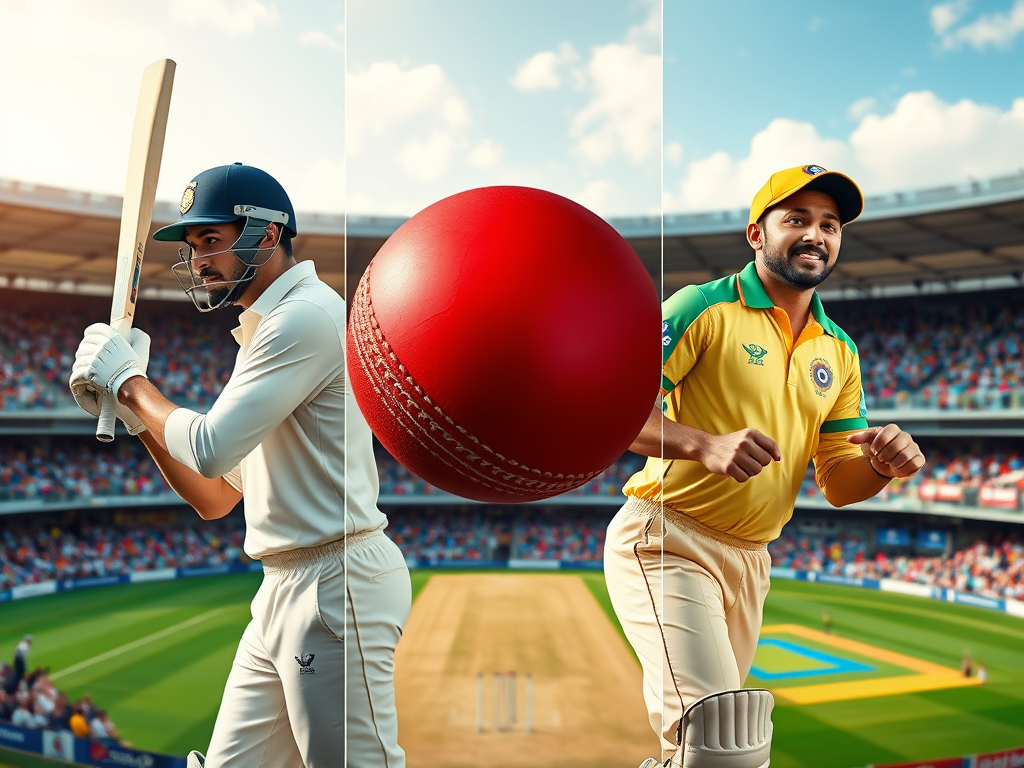
Delhi NCR, Cricastar Sports Desk: Cricket, a sport with a rich history stretching back to the 16th century, has evolved into a fascinating array of formats, each offering a unique flavor of competition and entertainment. From the timeless endurance of Test matches to the explosive action of T20, the variations of cricket cater to diverse audiences and playing styles. This article delves into the primary types and formats of this beloved sport.
The Three Pillars of International Cricket
At the international level, three main formats reign supreme, each with distinct rules, durations, and strategic approaches:
1. Test Cricket: The Ultimate Test of Skill and Endurance
- History and Significance: Test cricket is the oldest form of the game, with the first official Test match played in 1877. It is considered the pinnacle of cricket, demanding exceptional skill, mental fortitude, and physical stamina over an extended period.
- Duration and Structure: A Test match typically spans five days, with each team having the opportunity to bat for two innings. There is no limit to the number of overs bowled in an innings; instead, an innings ends when ten batsmen are out or the captain declares the innings closed for strategic reasons.
- Gameplay and Strategy: Test cricket is a strategic battle of attrition. Batsmen aim for long, patient innings, building scores gradually, while bowlers focus on exploiting weaknesses and applying pressure over sustained periods. Captaincy plays a crucial role in field placements and bowling changes to outmaneuver the opposition.
- Key Features:
- Played with a red ball.
- Players typically wear white uniforms.
- Emphasis on technical proficiency, patience, and mental toughness.
- Matches can end in a draw if time runs out before a result is achieved.
- Example: The Ashes series between England and Australia is one of the most celebrated and fiercely contested Test series in the world, steeped in history and tradition.
2. One Day Internationals (ODIs): Balancing Tradition and Excitement
- Emergence and Popularity: Introduced in the 1970s, ODIs offered a shorter, more fast-paced alternative to Test cricket, gaining immense popularity for their exciting nature and conclusive results within a single day.
- Duration and Structure: An ODI match involves two innings, with each team batting for a maximum of 50 overs. The team scoring the most runs within their allotted overs wins the match.
- Gameplay and Strategy: ODIs require a blend of aggressive batting and controlled accumulation of runs. Teams need to strategically manage their overs and wickets, with powerplays (periods with fielding restrictions) adding an extra layer of tactical nuance. Bowlers aim to restrict scoring and take crucial wickets.
- Key Features:
- Played with a white ball.
- Teams wear colored uniforms representing their nation.
- Emphasis on scoring rate and efficient bowling within a limited number of overs.
- Day-night matches are common, played under floodlights.
- Example: The ICC Cricket World Cup is the premier ODI tournament, held every four years, showcasing the best 50-over teams in the world.
3. Twenty20 Internationals (T20Is): The Fast and Furious Format
- Innovation and Spectacle: T20 is the newest and shortest international format, emerging in the early 2000s. Designed for fast-paced action and high entertainment value, it has attracted a new generation of fans globally.
- Duration and Structure: A T20I match consists of two innings, with each team batting for a maximum of 20 overs. The game typically concludes within about three hours.
- Gameplay and Strategy: T20 cricket is all about explosive hitting from the first ball. Batsmen prioritize scoring boundaries, while bowlers focus on variations and restricting runs in a high-pressure environment. Strategic field placements and clever bowling changes are crucial for captains.
- Key Features:
- Played with a white ball.
- Teams wear colored uniforms.
- Emphasis on aggressive batting, quick scoring, and innovative bowling.
- Franchise-based T20 leagues like the Indian Premier League (IPL) and Australia’s Big Bash League (BBL) are hugely popular.
- Example: The ICC Men’s and Women’s T20 World Cups are the pinnacle tournaments for this format, known for their thrilling finishes and unpredictable outcomes.
Beyond the Big Three: Other Notable Cricket Formats
While Test, ODI, and T20 dominate the international scene, other formats add to the rich tapestry of cricket:
- The Hundred: A relatively new format played in England, featuring 100 balls per innings, aiming for a shorter and more accessible game.
- T10 Cricket: An even shorter format with just ten overs per side, promising rapid-fire action.
- First-Class Cricket: Domestic matches of longer duration, often mirroring Test match conditions, played in various countries.
- List A Cricket: The domestic equivalent of One Day Internationals, with limited overs per innings.
- Club Cricket: Amateur level cricket played in local leagues and clubs, often with variations in rules and durations.
- Backyard/Street Cricket: Informal versions of the game played in various settings with adapted rules to suit the environment and number of players.
- Tape Ball Cricket: Popular in some regions, particularly Pakistan, where a tennis ball is wrapped in electrical tape to simulate the characteristics of a hard cricket ball.
- Indoor Cricket: A modified version played indoors, often with fewer players and different rules.
- Blind Cricket: An adapted version for visually impaired players, using a larger ball with bells inside.
Cricket’s enduring appeal lies in its diverse formats, each presenting unique challenges and excitement. Whether it’s the strategic depth of a five-day Test, the balanced contest of an ODI, or the explosive entertainment of a T20 match, there’s a style of cricket to captivate every fan and player. As the game continues to evolve, these different formats ensure that cricket remains a dynamic and globally cherished sport.
 Cricastar
Leave a Reply